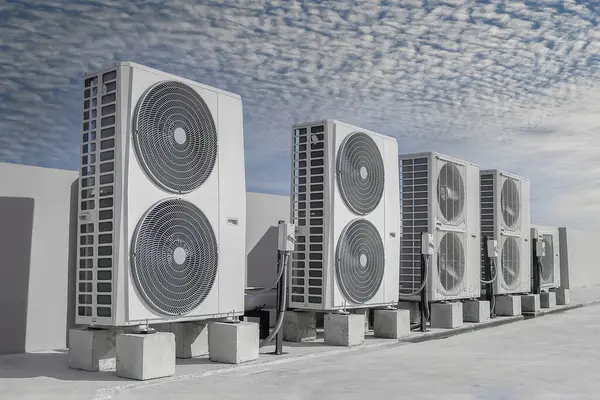
In the demanding world of data management where uninterrupted operation is paramount, the precision AC for server room represents a sophisticated cooling solution tailored to handle the intense heat and humidity challenges posed by high-density computing environments. These systems ensure that servers remain within optimal thermal ranges, preventing costly disruptions and extending hardware longevity amid ever-increasing computational demands.
Understanding Precision AC Systems
Precision AC for server rooms is a specialized climate control technology engineered to maintain exact temperature and humidity levels in spaces housing sensitive electronic equipment. Unlike general comfort cooling that adjusts for human preferences with broader tolerances, these units focus on the unique requirements of IT infrastructure, where even a one-degree deviation can lead to performance throttling or hardware failure. They operate on a closed-loop principle, recirculating and conditioning internal air to minimize exposure to external contaminants while efficiently removing sensible heat generated by servers. Core components include variable-speed compressors that modulate output based on real-time loads, electronically commutated fans for dynamic airflow, and microprocessor controls that sample conditions multiple times per second. Humidity management is achieved through dual-stage dehumidifiers and integrated humidifiers, keeping relative humidity between forty and sixty percent to avert issues like static discharge or corrosion. In server rooms, where heat densities can reach eighty kilowatts per rack in AI-driven setups, precision AC adapts seamlessly, using sensors to detect hotspots and adjust cooling distribution accordingly. This technology has evolved to incorporate IoT connectivity, allowing for seamless integration with building management systems and enabling data-driven optimizations that align cooling with server activity patterns.
Key Differences from Standard Air Conditioning
Standard air conditioning systems, designed primarily for offices or homes, fall short in server room applications due to their intermittent operation and lower sensible heat ratios. These units typically achieve a sensible heat ratio of around zero point six five, dedicating significant capacity to latent heat removal from moisture, which is unnecessary in dry-heat environments like data centers. Precision AC, however, boasts ratios exceeding zero point nine, channeling over ninety percent of effort toward temperature control while precisely managing minimal moisture loads. Air circulation rates in precision systems surge to forty to eighty changes per hour, far surpassing the five to fifteen in comfort setups, to rapidly evacuate heat and prevent mixing of hot and cold air streams. Built for continuous twenty-four-seven duty, they feature redundant elements such as dual power supplies and backup compressors, ensuring no single failure compromises the environment. Energy efficiency is further enhanced through economizer modes that utilize cooler ambient air when feasible, a capability absent in basic units. For server rooms, this translates to stable conditions during peak loads, such as traffic surges or power fluctuations, where standard systems might overcool or underperform, leading to energy waste and equipment stress.
Essential Benefits for Server Room Operations
The adoption of precision AC in server rooms delivers multifaceted advantages that safeguard operations and reduce costs. Foremost is enhanced reliability, as these systems prevent downtime by maintaining temperatures within plus or minus one degree Celsius, averting thermal throttling that could slow processing speeds by up to thirty percent. Humidity control mitigates risks of condensation and static electricity, which can cause data corruption or short circuits, potentially saving organizations from losses exceeding one hundred thousand dollars per hour in critical sectors like finance or e-commerce. Energy savings are substantial, with variable-speed components and smart controls cutting consumption by twenty to fifty percent compared to fixed-speed alternatives, especially in partial load scenarios common during off-peak hours. Air filtration features trap particulates and chemicals, extending server lifespan by reducing dust accumulation on components. Proactive alerts for anomalies, such as filter clogs or refrigerant leaks, enable maintenance before issues escalate, minimizing unplanned interruptions. In resilience terms, during events like power outages or extreme weather, battery backups and redundant designs sustain cooling for hours, as demonstrated in real-world scenarios where systems maintained stability amid storms. Overall, these benefits position precision AC as a strategic investment, aligning with sustainability goals through lower carbon emissions and supporting the scalability of growing data infrastructures.
Types and Configurations Available
Precision AC systems come in various configurations to suit diverse server room layouts and scales. Air-cooled models reject heat via external condensers, ideal for locations without water infrastructure, and handle capacities from ten to one hundred kilowatts. Water-cooled variants connect to chilled loops or towers for higher efficiency in large facilities, often integrating with building systems to recycle waste heat. Glycol-cooled options extend usability to cold climates by preventing freezing in outdoor lines. For high-density environments, in-row units are placed directly between racks, capturing exhaust heat at the source and delivering targeted cooling with minimal air travel. Rear-door heat exchangers replace standard rack doors with active cooling surfaces, supporting ultra-dense setups without occupying floor space. Downflow configurations push air through raised floors to supply cold aisles, while upflow or overhead models suit slab floors or retrofits. Hybrid systems blend air and liquid cooling, addressing extreme loads from GPU clusters by combining precision air management with direct-to-chip fluids. Modular designs allow phased expansions, enabling facilities to add capacity without overhauls, and many include free-cooling economizers for seasonal energy reductions.
Advanced Features Enhancing Performance
Modern precision AC incorporates cutting-edge features to optimize server room environments. Variable-speed drives on compressors and fans match output to demand, achieving up to fifty-six percent energy reductions during variable loads. Smart sensors monitor multiple parameters, including air quality and occupancy, using artificial intelligence to predict and adjust for upcoming needs based on historical data and weather forecasts. Inverter technology ensures smooth operation with reduced noise levels, dropping by eight to fifteen decibels compared to traditional units. New refrigerants like R-32 provide faster cooling with lower environmental impact, complying with 2025 regulations. Integration with IoT platforms facilitates remote diagnostics, where cloud-based analytics detect inefficiencies like reduced coil performance and schedule interventions. Redundancy is built-in, with automatic failover to backup components occurring in seconds to maintain sub-zero point five degree deviations. Air purification via HEPA filters and UV elements combats contaminants, while zoning capabilities segment cooling for mixed-use spaces, further conserving energy.
Maintenance Best Practices for Longevity
Sustaining precision AC performance in server rooms requires a structured maintenance regimen to ensure efficiency and uptime. Monthly filter replacements prevent airflow restrictions that could raise energy use by five to thirty percent, while quarterly coil cleanings maintain heat transfer rates and avert microbial growth. Annual refrigerant checks identify leaks early, preserving capacity and complying with environmental standards. Lubrication of motors and alignment of belts reduce mechanical wear, extending component life by five to eight years. Sensor calibrations guarantee accuracy in control algorithms, and electrical inspections mitigate fire risks. Predictive tools analyze trends to forecast failures, allowing parts replacement during off-hours without downtime. Professional audits biannually include pressure testing and system balancing, optimizing overall operation. For server rooms, integrating maintenance with IT schedules minimizes disruptions, and using smart thermostats for automated adjustments can yield additional twenty percent savings. This proactive approach not only lowers repair costs by twenty-five to thirty-five percent but also aligns with warranty requirements for sustained reliability.
Innovations Shaping the Future in 2025
As of 2025, precision AC for server rooms is advancing with innovations focused on intelligence and sustainability. Artificial intelligence now optimizes cooling based on workload forecasts and external conditions, slashing energy use by an additional thirty percent through adaptive algorithms. Liquid immersion hybrids tackle soaring densities from AI applications, combining air precision with fluid efficiency for heat loads exceeding one hundred kilowatts per rack. Eco-friendly refrigerants with global warming potentials below one are standard, supporting carbon-neutral data centers. Modular micro-data-center designs enable edge deployments with self-contained cooling, while drone-assisted inspections enhance safety in large facilities. Market growth, projected at over six billion dollars, is driven by cloud expansion and green regulations, with suppliers emphasizing programmable controls and heat recovery systems. For those seeking diverse options, exploring precision ac for server room link alternatif can reveal additional providers and cutting-edge alternatives.
About the Author